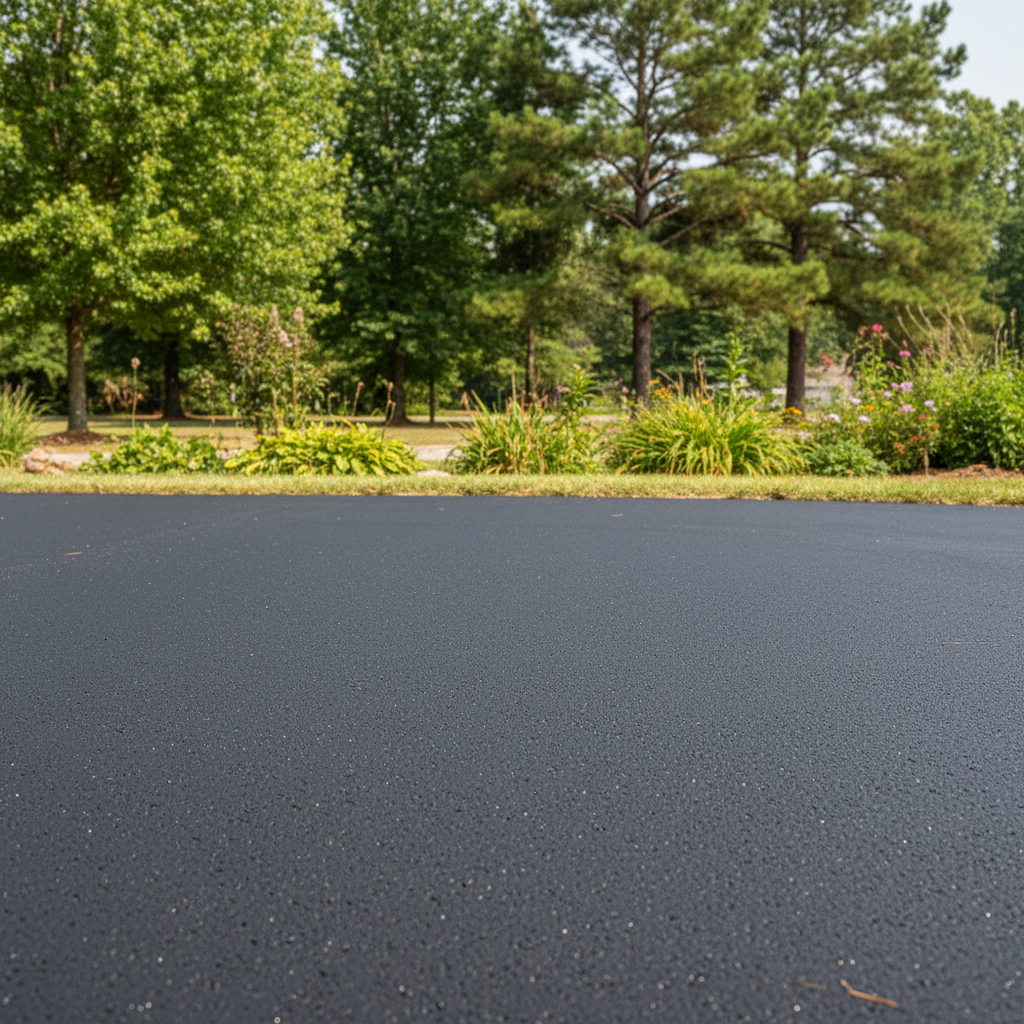
Alright, let's talk about slurry coating. I get a lot of questions from homeowners around Fayetteville, especially those in places like Johnson or Farmington, about how to keep their driveways looking good and lasting a long time. You've probably heard of sealcoating, but slurry coating is a bit different, and it might be exactly what your asphalt needs. It's not some magic fix, but it's a solid choice for the right situation. Here's the straight scoop on what you need to know.
What exactly *is* slurry coating? Is it just fancy sealcoating?
No, it's not just fancy sealcoating, though both do protect your asphalt. Think of slurry coating as a thicker, more robust resurfacing treatment. It's a cold-mix blend of asphalt emulsion, water, and fine aggregates – basically, tiny crushed rocks or sand – plus some other additives. Sealcoating is generally thinner, with finer or no aggregates; its main job is to protect against UV and water. Slurry coating, on the other hand, actually helps fill in minor surface imperfections and gives you a brand new wearing surface.
When should I consider slurry coating my driveway?
You should be looking at slurry coating if your asphalt driveway is showing signs of age like minor cracking, surface raveling (that's when the small stones start coming loose), or just looks faded and worn. It's a great preventive maintenance step that can extend your driveway's life by sealing those smaller cracks and protecting it from water damage and the sun. It's not for major structural damage or big potholes, though. You'll want to get those repaired first, naturally.
How long does a slurry coat typically last on a residential driveway?
Generally, a good slurry coat can last anywhere from 5 to 10 years. That's a pretty decent lifespan, especially when you compare it to sealcoating, which usually needs reapplication every 3 to 5 years. The exact longevity depends on a few things: how much traffic your driveway gets, the quality of the application, and of course, our wild Northwest Arkansas weather. Those hot summers and freezing winters, especially with our clay soils expanding and contracting, can be tough on any pavement.
Is slurry coating expensive compared to other options?
Yes, slurry coating is generally more expensive than a standard sealcoat. That's because it's a more substantial treatment, uses more material, and often requires specialized equipment to apply correctly. But here's the kicker: it lasts longer. So, while the upfront cost is higher, it can actually be more cost-effective in the long run because you don't have to do it as often.
What's the application process like, and how long until I can drive on it?
First off, preparation is absolutely key. We'll clean the surface thoroughly, removing any loose debris, dirt, and old material. Any larger cracks or potholes need to be filled and repaired before we even think about slurry. Then, the slurry mixture is applied cold, usually with a specialized machine that spreads it evenly. It's a pretty quick process once we get going. As for driving on it, you'll typically need to wait about 4 to 6 hours for it to dry enough for light traffic. Sometimes it might be longer, up to 24 hours or even 72 hours in some cases, depending on the weather conditions – humidity and temperature play a big role in curing time, you know?
Will slurry coating make my driveway perfectly smooth again?
It'll definitely improve the surface, but don't expect it to be perfectly smooth like brand-new asphalt. Slurry coating has aggregates in it, so it naturally has a rougher texture than sealcoating. This rougher texture is actually a good thing because it provides better traction and skid resistance, which is especially nice on those sloped driveways we see a lot of around here. It fills in minor voids and evens out some of the surface irregularities, making it look a whole lot better and giving it a fresh, dark black color.
Can I do this myself, or should I hire a pro?
Look, I'm all for DIY when it makes sense, but slurry coating isn't usually one of those projects. It involves specific materials, specialized equipment, and a precise application process to get it right. If the surface isn't prepped correctly, or the mix isn't applied evenly, you're going to have problems with it peeling, not bonding, or just not lasting. For a job like this, you really want a professional who knows what they're doing and has the right tools. We've seen plenty of DIY attempts that end up costing more to fix than if they'd just hired Mighty Paving Solutions in the first place.